Power Plants of the Cell Sites of Oxidative Metabolism
Sites of oxidative metabolism. Kidneys are fuel-hungry organs and only second to the heart in mitochondrial number and oxygen consumption.
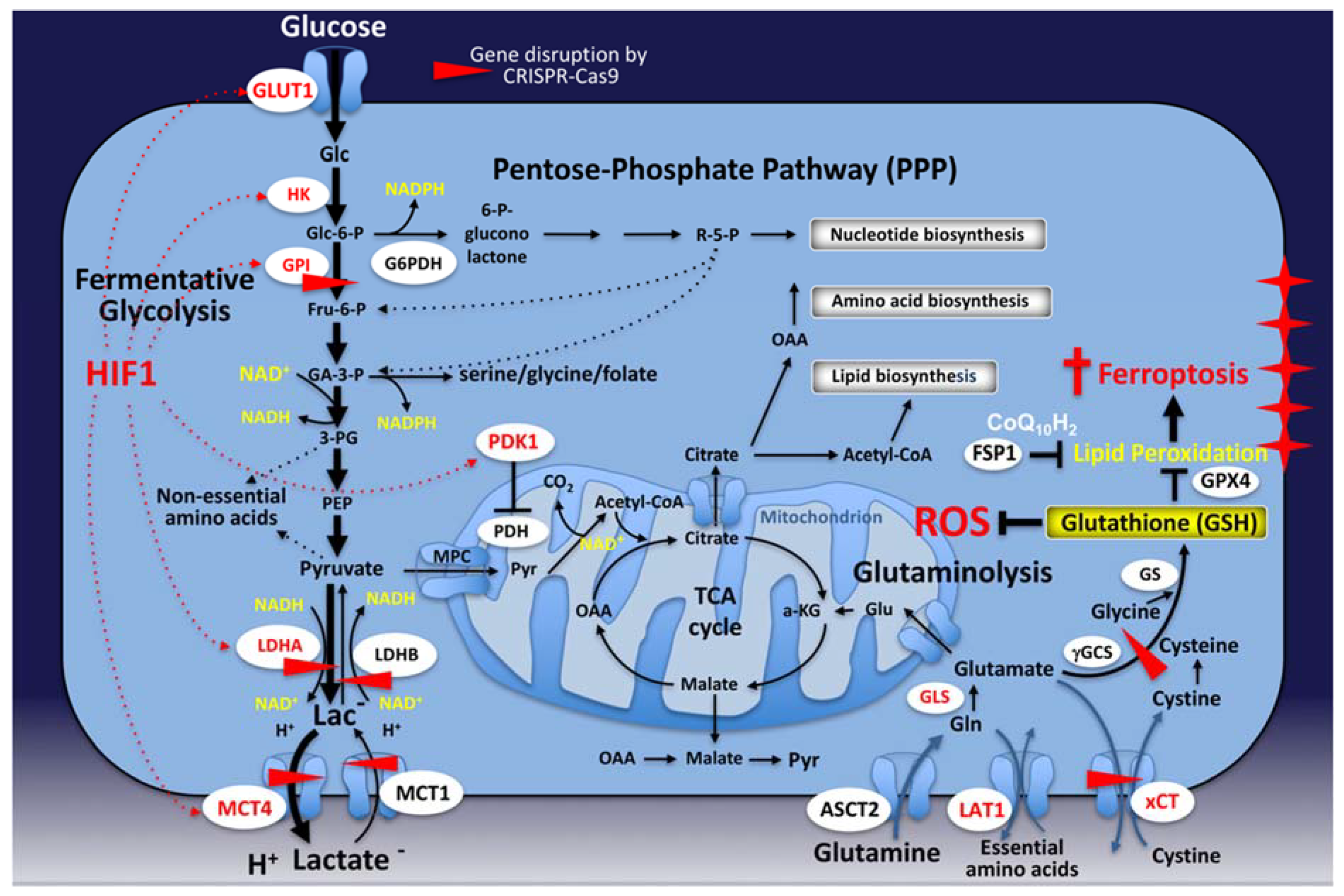
Cancers Free Full Text Warburg And Beyond The Power Of Mitochondrial Metabolism To Collaborate Or Replace Fermentative Glycolysis In Cancer Html
They act as the power plants of the cell are surrounded by two membranes and have their own genome.
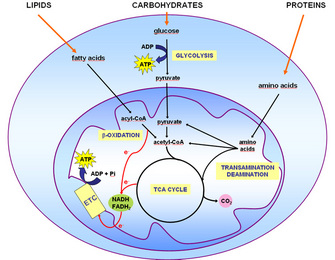
. Power plants of the cell. Power plants of the cell. Contains genetic information b.
Sites of oxidative metabolism. Metabolize sugar to generate ATP generates heat in brown fat cells. Contains two membranes contain DNA arose by endosymbiosis.
Sites of photosynthesis G. Learn vocabulary terms and more with flashcards games and other study tools. Intracellular compartment forms transport vesicles participates in lipid synthesis and synthesis of membrane or secreted proteins lekto rach Click to select C.
Start studying Cell Structure Function. Bacteria-like elements with membranes containing chlorophyll a photosynthetic pigment. This article speculates on why this might be so.
Sites of oxidative metabolism. Releases enery stored in food. Biology questions and answers.
Used in break down of fats and contains the enzyme catalase. Long threads of DNA that forms a complex with proteins. Power plants of the cell.
There is library for the nucleus power plants for the mitochondria garbage disposal for lysosomes post office for Golgi complex. The power plants of a cell which are small oval organelles with double membranes often referred to as the power plants of the cell Figure 2013 Respiration. Forms secretory vesicle d.
Instructions for protein synthesis and cell reproduction. Regulates water levels in plant cells. A recent study has highlighted the relationship between mitochondrial ATP generation and protection against organ injury following ischaemiareperfusion injury in the kidney.
In eukaryotic cells a process of cell division that forms two new membranes and that is the site of cellular respiration which produces ATP. Power plants of the cell. The mitochondrion is an organelle that supplies cellular energy to the rest of the cell.
Mitochondria are unusual organelles. Power plants of the cell. The Krebs cycle referred to as the citric acid cycle as well as the tricarboxylic acid TCA cycle describes the oxidative part of oxidative metabolism.
The electron transport chain and chemiosmosis. Sites of oxidative metabolism- make ATP. Sites of oxidative metabolism.
Site of genes for rRNA synthesis. In chemiosmosis the energy stored in the. They constantly change shape network and hungrily consume oxygen and fuels to produce ATP the battery storage units of energy in our bodies which is shipped throughout the cell Box 1.
Oxidative metabolism requires the presence of oxygen. The significance of altered nutrient availability particularly oxygen and metabolic pathway activity has been highlighted by extensive studies of their impact on. Bacteria-like elements with membrane containing chlorophyll a photosynthetic pigment.
Packages proteins for export. Participates in lipid synthesis and synthesis of membrane or secreted proteins c. The structure of an eukaryote cell is shown in Figure 04 in which the cell organelles are often likened to the various utilities within a city.
Packages proteins for export from cell. Metabolism is central to embryonic stem cell ESC pluripotency and differentiation with distinct profiles apparent under different nutrient milieu and conditions that maintain alternate cell states. Use light to generate ATP site of photosynthesis.
As our cellular power plants the mitochondria have the unenviable task of generating the majority of ATP required for cellular function. In the electron transport chain electrons are passed from one molecule to another and energy released in these electron transfers is used to form an electrochemical gradient. Bacteria-like elements with double membrane.
Match the organelle with its function. Power plants of the cell. All the enzymes and coenzymes for the citric acid cycle the reoxidation of NADH and FADH 2 and the production of ATP are located in the mitochondria Small oval organelles with double membranes.
They also divide independently of. Instructions for protein synthesis and cell reproduction contains genetic information B. Intracellular compartment forms transport vesicles.
Photosynthesis in cells is another type of metabolic pathway that organisms use to make sugar. Cellular respiration is a type of metabolic pathway that breaks down glucose to make adenosine triphosphate or ATP. Oxidative phosphorylation is made up of two closely connected components.
Oxidative phosphorylation the process where electron transport from the energy precursors from the citric acid cycle step 3 leads to the phosphorylation of ADP producing ATP. Sites of oxidative metabolism chloroplasts description. This also occurs in the mitochondria.
Match the organelle with its function. The main reactants are glucose and oxygen while the main products are carbon dioxide water and ATP.
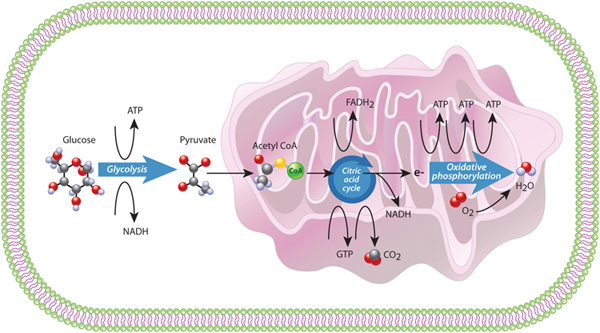
Metabolism In A Eukaryotic Cell Glycolysis The Citric Acid Cycle And Oxidative Phosphorylation Learn Science At Scitable
Nutrient Metabolism Human Learn Science At Scitable
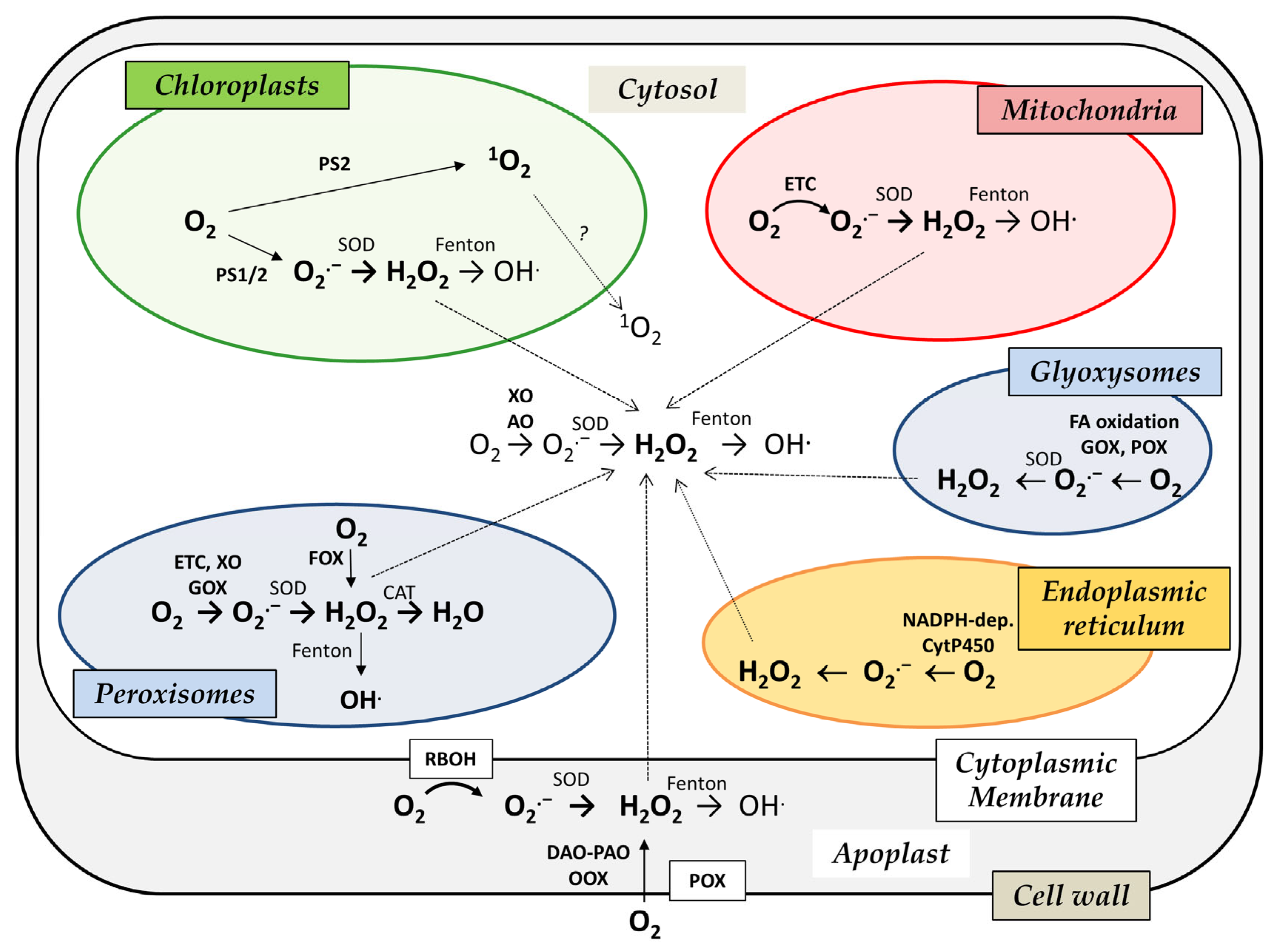
Antioxidants Free Full Text On The Origin And Fate Of Reactive Oxygen Species In Plant Cell Compartments Html

Nutrient Sensing And The Oxidative Stress Response Trends In Endocrinology Metabolism
Comments
Post a Comment